
 Shopping Guide
5/21/2017
5/28/2017
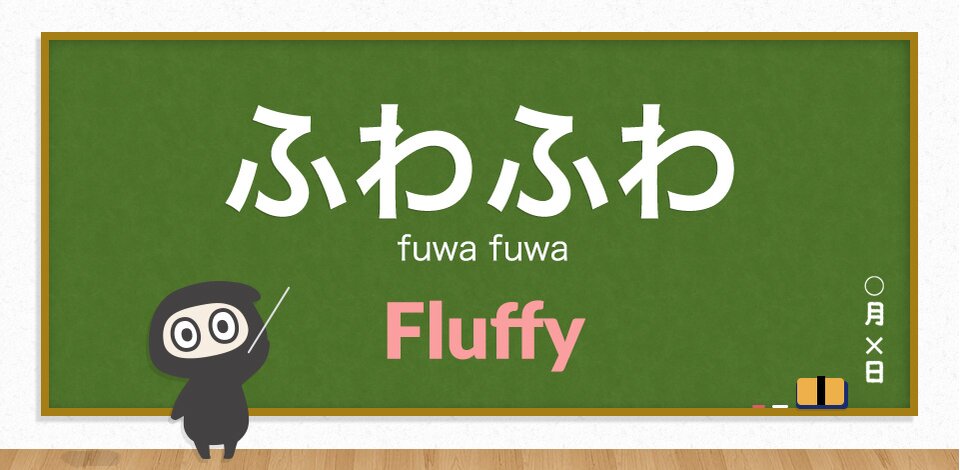
The word ふわふわ (fuwa fuwa) means fluffy, and can be used to describe anything from fluffy cushions to fluffy scrambled eggs.
In fact, the well-known anime song ふわふわ時間 (Fuwa Fuwa Time) from K-ON! even describes the wavering emotions a girl feels when they're in love as "fluffy like a marshmallow"!
What uses can you think of for the word ふわふわ?
6/4/2017
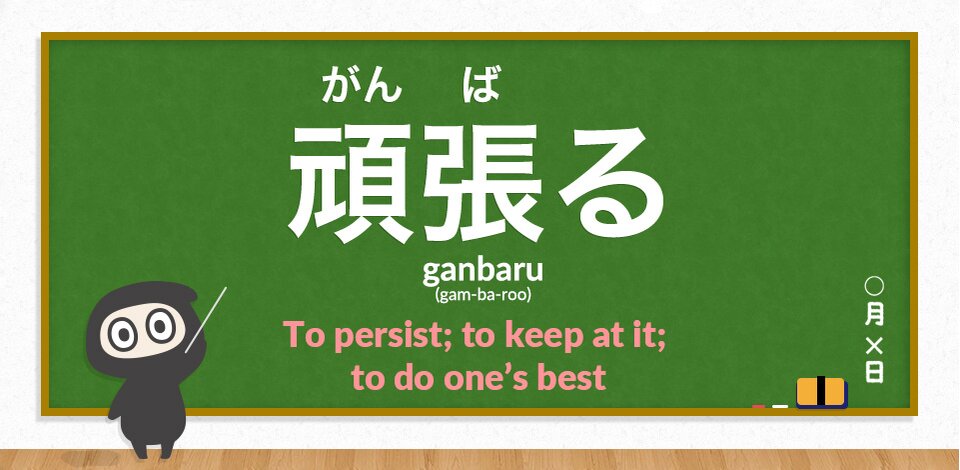
The verb 頑張る (ganbaru) means to work hard or to do your best, and is one of the most commonly used Japanese words, whether in everyday life or in anime.
When you are handed a task or assignment to do, or are expected to achieve some sort of result, an appropriate thing to say would be 頑張るます! (ganbari masu!) which means "I'll do my best!" Depending on the context and your tone, you can use it to mean that you are resolved to achieve those results no matter what, or that you make no promises but will do what you can.
Here are some ways you can use 頑張る:
Telling others to do their best.
頑張ってください! (ganbatte kudasai!) - Please do you best!; Please give it all you've got! (Polite form)
頑張って! (ganbatte!) - Do your best! (Casual form)
頑張れ! (ganbare!) - Give it all ya got! (Casual command form)
頑張りなさい。 (ganbari nasai) - Work hard.; Do your best. (Polite command form)
Saying you will do your best.
頑張ります! (ganbari masu!) - I will do my best! (Polite form)
頑張る! (ganbaru!) - I'll do my best! (Casual form)
6/11/2017
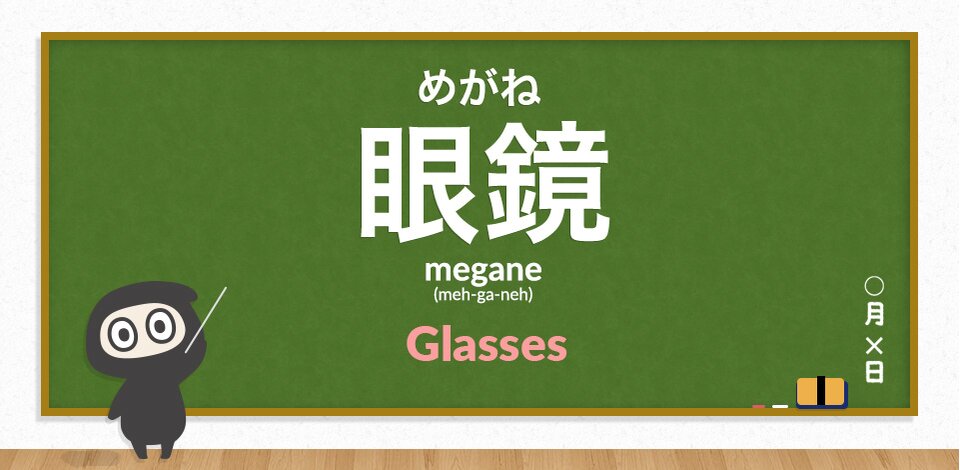
眼鏡 (megane) means glasses in Japanese.
The anime trope 眼鏡っ子 (meganekko) refers to a young female character who wears glasses.
Glasses are, in some cases, considered to be a "moe factor", or an element or characteristic that deems a female character cute and appealing. 眼鏡っ子 (meganekko) is the term for describing this cute, glasses-wearing character type.
In Japan, computer glasses are very popular.
Computer glasses have lenses that cut blue light, which are harmful rays emitted by digital screens, such as smartphones and computers. Manufacturers often collaborate with anime series to produce designs based on popular characters, making computer glasses popular amongst the otaku crowd as well. For those who like the anime designs but need prescription lenses, the lenses can also be swapped out at any optometrist so that you can enjoy both the style and the functionality of your glasses.
6/25/2017
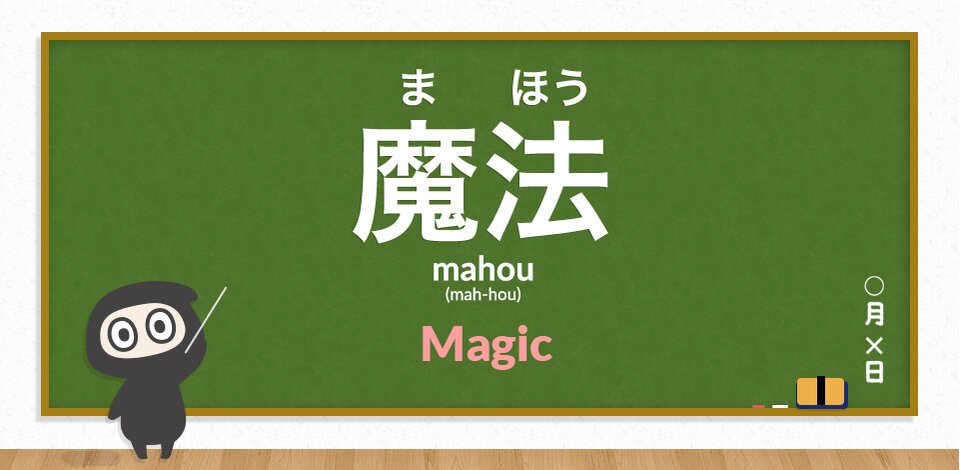
魔法 (mahou) means magic in Japanese.
If we break it down, the word 魔 (ma) means demon or demonic, and 法 (hou) means ways or methods. So, translated literally, the word would mean "demonic methods" or "evil ways". However, the term 魔法 (mahou) itself does not have any negative connotations today and is simply used to mean "magic."
Surely you've heard of the word through the term 魔法少女 (mahou shoujo), or "magical girl!"
Or perhaps through the famous quote from the anime series Little Witch Academia: 信じる心があなたの魔法よ (shinjiru kokoro ga anata no mahou yo) , "A believing heart is your magic."
Below are some common Japanese terms you've probably heard in anime involving the word magic:
魔法使い (mahou tsukai) - witch; wizard; sorcerer; magician (anyone who is a "magic user")
魔法の杖 (mahou no tsue) - magic wand; magic staff
魔法陣 (mahou jin) - magic cricle
魔女 (majo) - witch
魔力 (maryoku) - magical power; magical energy
7/2/2017
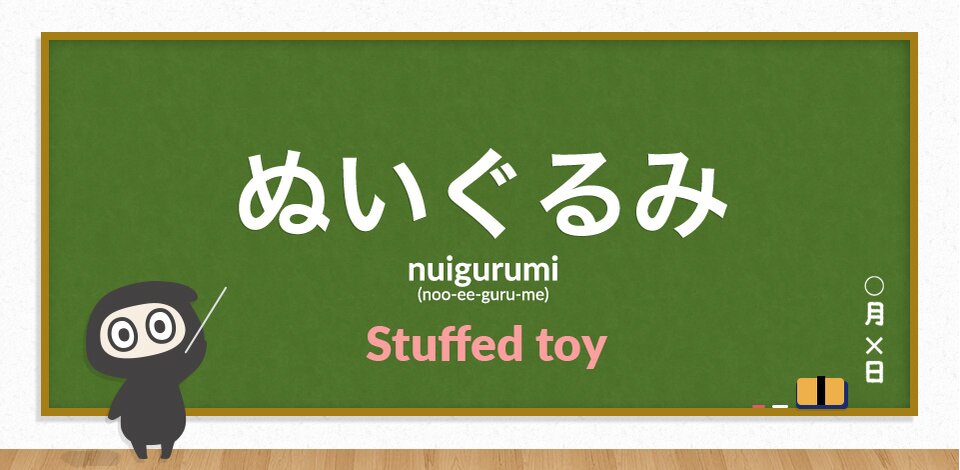
ぬいぐるみ (nuigurumi) means stuffed toy or plushie in Japanese.
The word originates from the two verbs 縫う (nuu), to sew, and 包む (kurumu), to wrap or cover. It literally describes fabric wrapped over stuffing and sewed up. A pretty straightforward way to describe a stuffed toy, right?
Japan is known for many things, including being the makers of some of the world's more adorable plushies! See for yourself!
7/9/2017
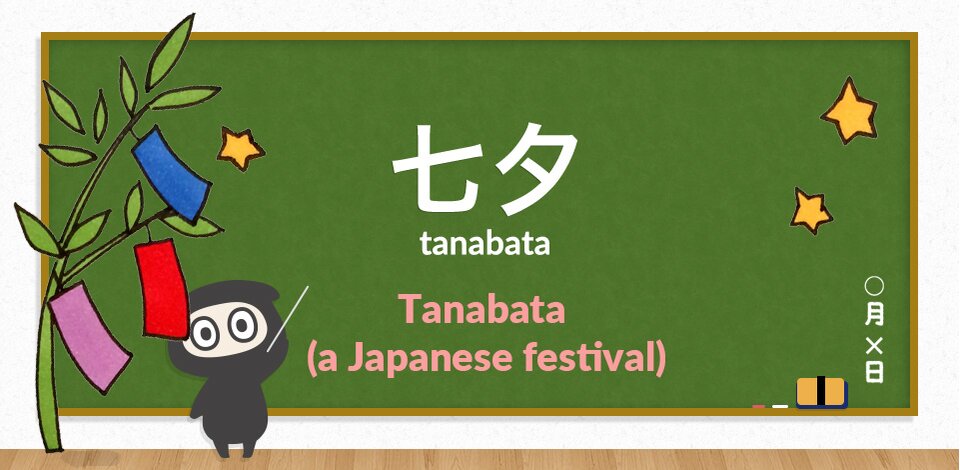
七夕 (tanabata) translates literally to "evening of the seventh", and is a Japanese festival that occurs annually on July 7th. Depending on the region in Japan, it can be celebrated on varying dates throughout the months of July and August.
The Japanese Tanabata Festival, also known as the Star Festival, originated from the Chinese Qixi Festival, and has a similar backstory as well. Legend has it that the deities Orihime and Hikoboshi (represented by the stars Vega and Altair) are husband and wife who have been separated by the Milky Way, and are allowed to meet only once a year on the seventh day of the seventh month.
On Tanabata, people write wishes on strips of colorful paper, hang them on bamboo branches, and hope for them to come true. Outdoor festivals and parades also take place, creating a festive atmosphere. Things that come to mind when people mention Tanabata are stars, colorful streamers and decorations, wishes on bamboo branches, couples, yukata, and festivities!
7/16/2017
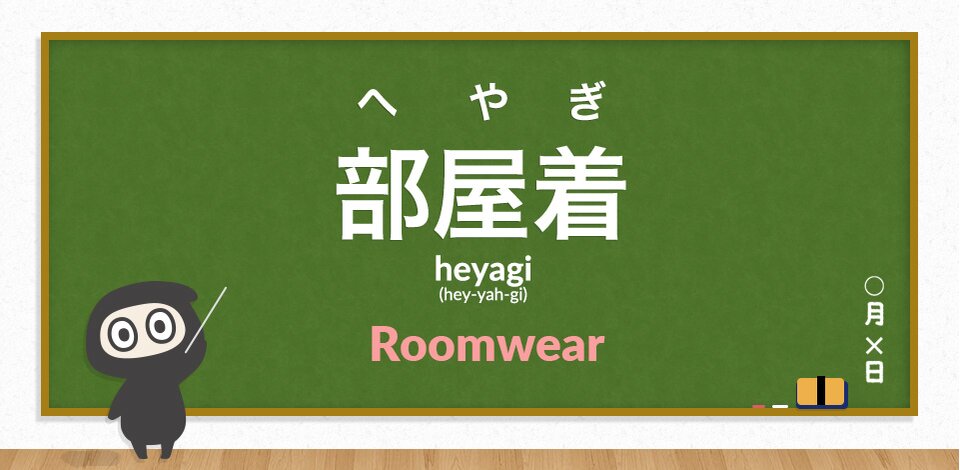
部屋着 (heyagi) means roomwear in Japanese. Think, that silly T-shirt you wear to bed as pajamas, or that oversized hoodie you only ever put on at home. In many cases, roomwear involves comfy but sloppy attire, and embarrassing designs that we would never be caught dead wearing outside. In Japan, however, anything you can imagine probably has a cute and cleverly designed version, and roomwear is no exception.
Japan has countless brands dedicated to creating the cutest, comfiest, and in some cases the quirkiest roomwear. From slippers that look like baguettes to pajamas that look like sailor uniforms, you're sure to find something you didn't even know you loved.
7/23/2017
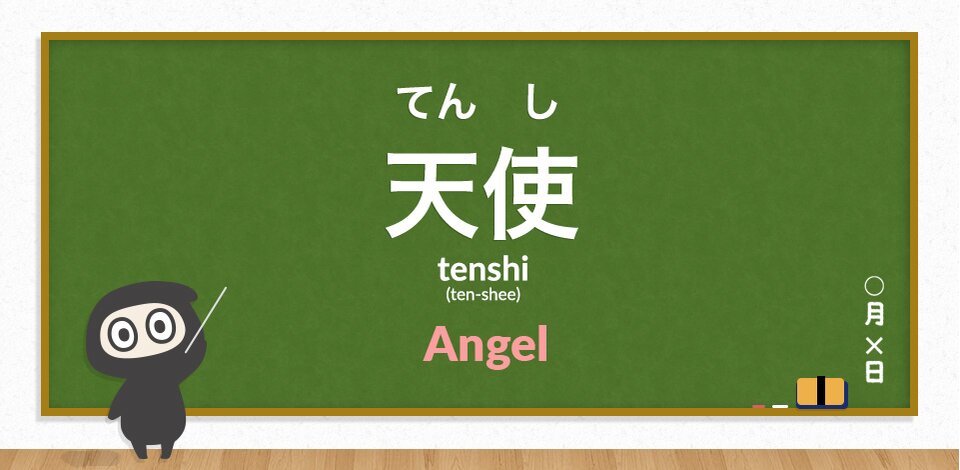
天使 (tenshi) means angel in Japanese. If we break it down, 天 (ten) means sky or heaven, and 使 (shi) means messenger, so the term literally translates to "messenger from the sky" or "messenger from heaven"!
There are various "angel" characters in anime, from actual angels sent from heaven (albeit gradually losing their angelic characteristics, such as in Gabriel DropOut) to alien beings given the name "Angel" who cause mass destruction on earth (such as in Neon Genesis Evangelion). How many angel characters from anime can you name?
7/30/2017
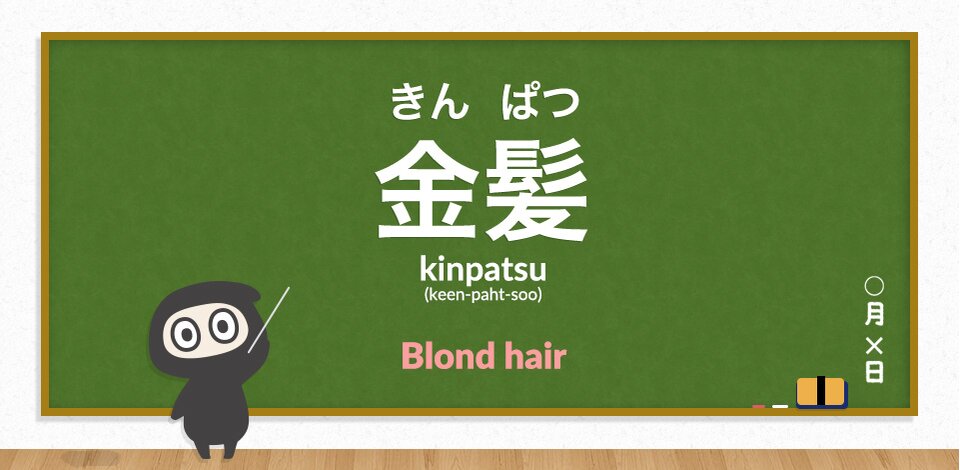
金髪 (kinpatsu) means Blond (Blonde), or blond hair, in Japanese. 金 (kin) means gold, while 髪 (kami, read as patsu when in combination with kin) means hair.
The stereotypical belief in Japan is that people with bleached hair are delinquents. On the other hand, foreigners with blond hair are typically considered handsome or beautiful. In anime, however, blond hair does not always mean delinquent. Sometimes, blond hair is given to characters who are portrayed as pretty or handsome. In anime where characters have very colorful hair, anywhere from purple to green, yellow hair is just another color. How many blond anime characters can you name?
8/6/2017
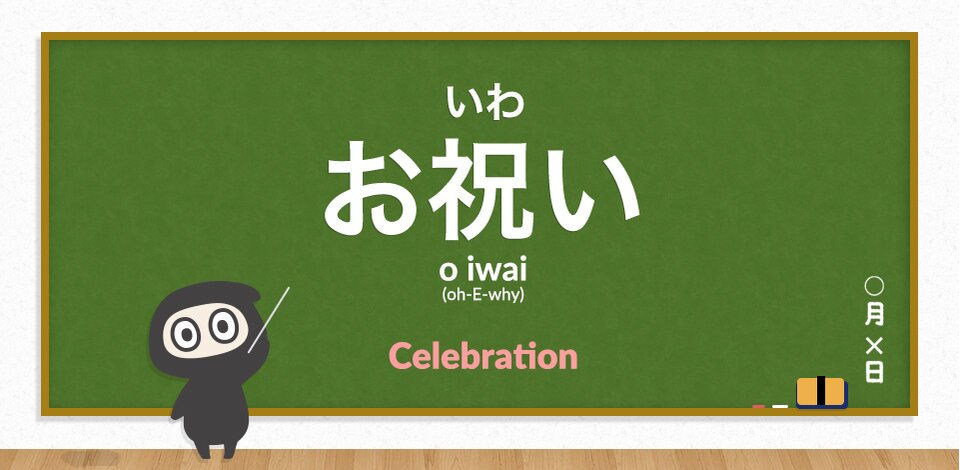
お祝い (o iwai) means celebration, festival, or congratulation in Japanese. 祝い (iwai) means celebration, conjugated from the verb 祝う (iwau), to celebrate, and お (o) is optionally added at the beginning of the noun to give it a more polite and/or formal touch.
Common celebrations range from 誕生日祝い (tanjoubi iwai), birthday celebration, to 卒業祝い (sotsugyou iwai), graduation celebration, but the term お祝い (o iwai) can literally be used to describe any celebratory occasion.
Here on the TOM Shop, we are celebrating Miku's 10th Anniversary from August 1 to September 30! There are prizes to win, coupons to claim, and exclusive merchandise to collect! Join the お祝い here!
誕生日のお祝い (tanjoubi no oiwai) - Birthday celebration
卒業のお祝い (sotsugyou no oiwai) - Graduation celebration
初音ミクの10周年お祝い (Hatsune Miku no jusshuunen oiwai) - Hatsune Miku's 10th Anniversary Celebration
8/13/2017
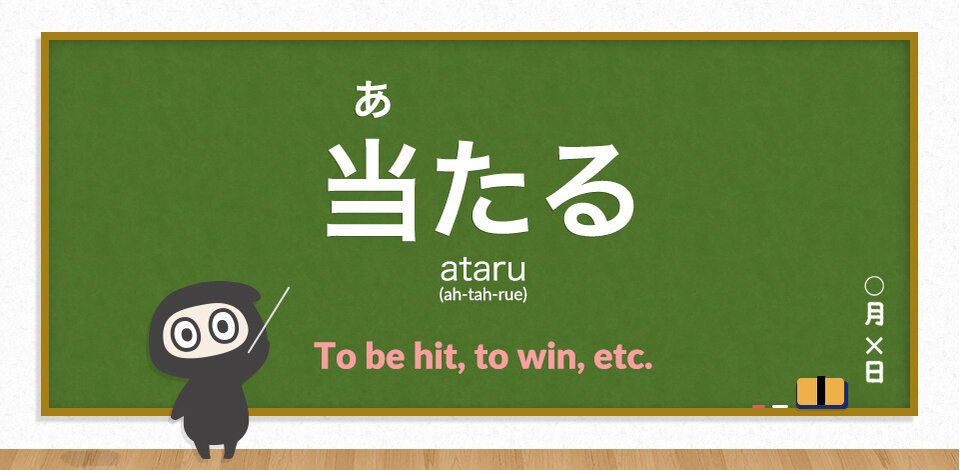
当たる (ataru) is a common verb that has many different meanings. It's most common usage is "to be hit" in the literal sense, such as hitting or bumping into something. It can also mean "to touch" or "to be in contact", such as if someone's bag is touching your leg on a crowded bus. Another common meaning is "to win", and that is the focus of today's lesson!
Those of us who watch anime a lot probably learned that 勝つ (katsu) means "to win", and that's not incorrect, either. However, 勝つ (katsu) means to win in a fight, a contest, or a similar situation where you have some degree of control over the outcome. 当たる (ataru), on the other hand, means to win a lottery or gain a certain outcome by luck. (An easy way to remember that "hit" also means "win" is to compare it with the phrase "hit the jackpot"!)
8/20/2017
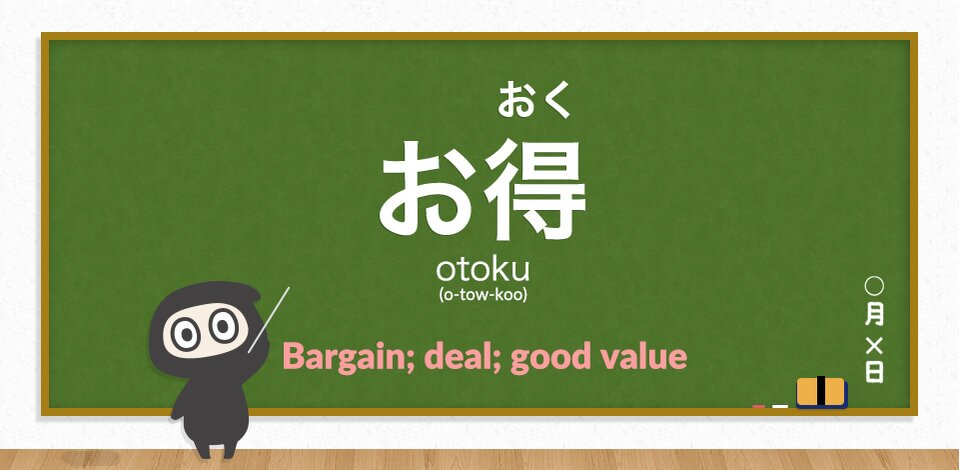
お得 (otoku) means economical or good value in Japanese, and is a very common term to describe a good deal or a bargain. If you visit Japan, you are sure to hear it in commercials and see it on advertisements. If a product is on sale, it is お得 (otoku). If one plan is a cheaper option than another, it is お得 (otoku). Do you know where to find お得 (otoku) on the TOM Shop? Find everything on sale here (just flick on the "sale" filter!), and everything with bonus cashback in TOM Points here!
8/27/2017
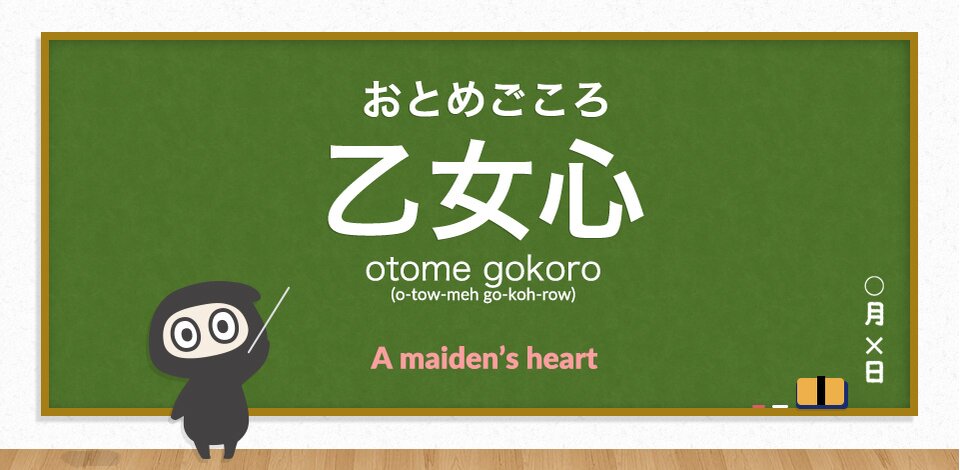
You've probably heard this term in an anime or manga at some point and never really understood what it meant. 乙女心 (otomegokoro) is a concept that is common enough to have its own term in Japanese, but not in English. Translating directly to "a maiden's heart", 乙女心 (otomegokoro) describes the heart or feelings of a young girl - pure, naive, innocent, and sensitive.
乙女 (otome) means young lady or little girl, generally referring a girl between the ages of 7 - 18 years old, while 心 (kokoro) means heart. Imagine the heart of an innocent, fragile young girl; that is essentially what the term 乙女心 (otomegokoro) describes.
However, anyone can have an 乙女心 (otomegokoro). Even as an adult, if someone has a pure and sensitive heart, they can be said to retain an 乙女心 (otomegokoro). If fact, 乙女心 (otomegokoro) is such a romantic concept, many women's fashion brands in Japan have based the concept of their brand around this theme. One such brand is Swankiss, which designs romantic pieces with ribbon, frills, lace, hearts, and everything that would stir a maiden's heart. 💗
We hope this has helped you understand the concept of 乙女心 (otomegokoro) a little better!
9/3/2017
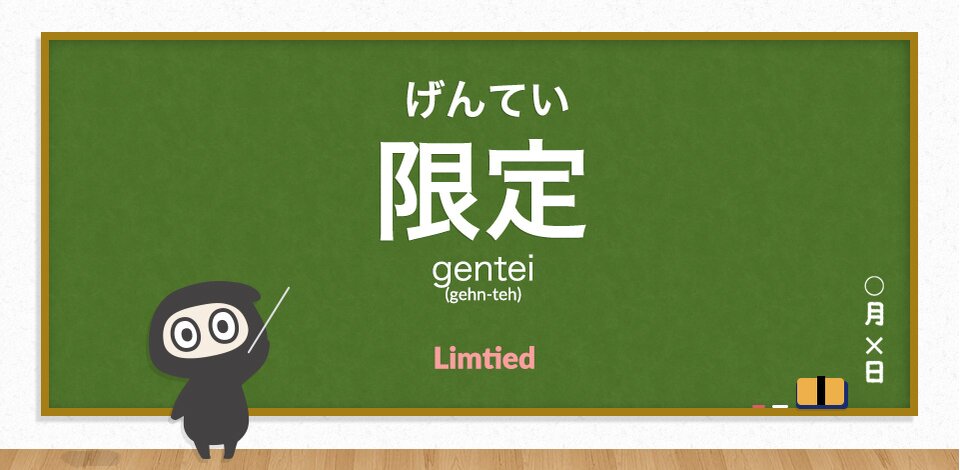
限定 (gentei) means limited in Japanese, and it's most commonly used in the context of advertising for products, sales, and promotions. You've probably seen a scene in anime where the character is super excited for a new dessert flavor that's only available for a limited time, or some similar variation. That's because 限定 (gentei) items and deals are extremely common and popular in Japan!
数量限定 (suuryou gentei) - limited quantity
期間限定 (kikan gentei) - limited time
地域限定 (chiiki gentei) - region limited
女性限定 (josei gentei) - girls only
Here on the TOM Shop, limited time offers pop up frequently, and there's almost always something different happening each month! Check our ongoing promotions page here to see what's happening right now!
