


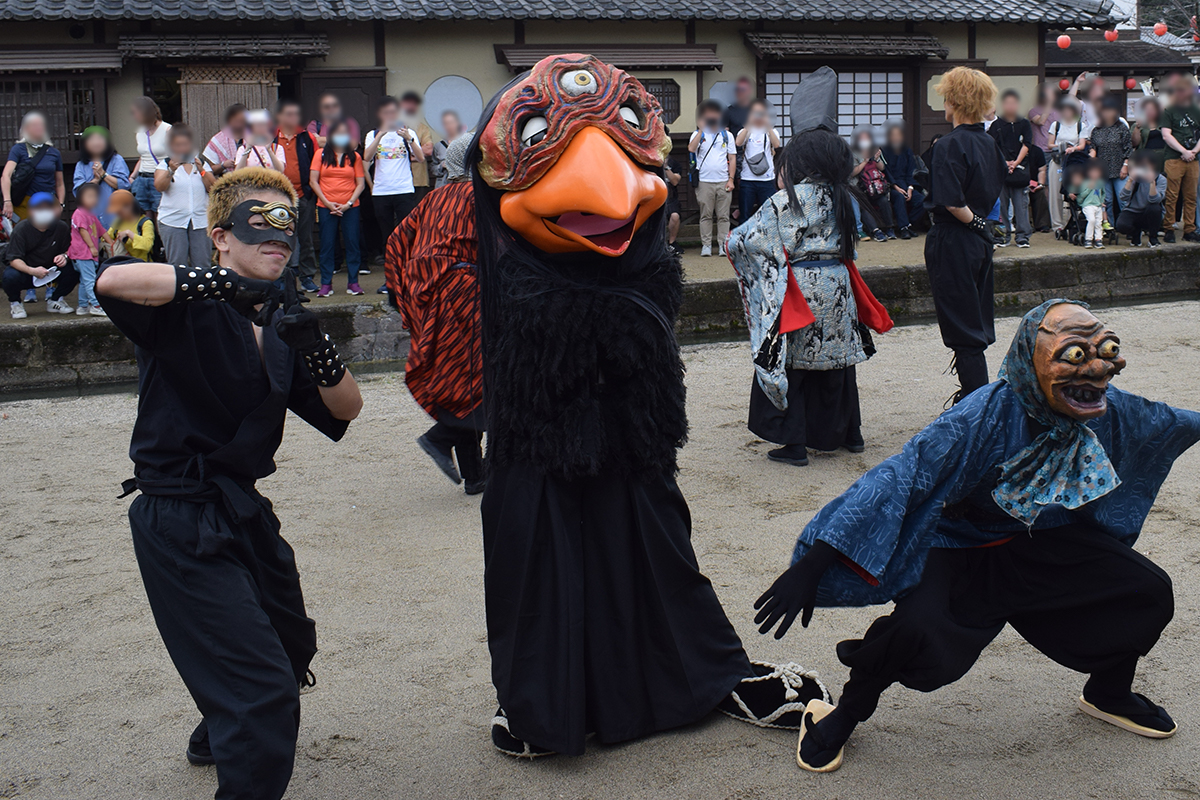
As the nights grow longer and colder, it is the perfect season to experience something a little strange and spooky. With that in mind, for this issue of the TOMZINE, we focused on the topic of yokai. These mysterious, strange and oftentimes scary entities can be found scattered throughout history in the myths and folklore of Japan where they live alongside humans and nature. Some yokai like kappa and tengu have remained part of popular culture and can be found scattered across newer media like anime, manga and games. However, anime like GeGeGe no Kitaro or Natsume’s Book of Friends have also done a fantastic job in bringing attention to lesser known yokai and creating a few new ones as well.
As mysterious and mystical as they are, we wondered if yokai could be found in real life? Our hunt led us to Toei Kyoto Studio Park, a theme park in the Kyoto area where you can experience the atmosphere and scenery of historical Japan from the Edo period. In fact, the park is often used as a set for numerous historical films known as jidaigeki which translates to “period dramas”. It turns out that this historical setting is perfect for yokai to live in as they are often out of place in our modern world. Thus, for a couple months out of the year, Toei Kyoto Studio Park becomes a yokai village during the Kaikai Yokai Festival where visitors get the chance to see and interact with yokai and learn more about them.
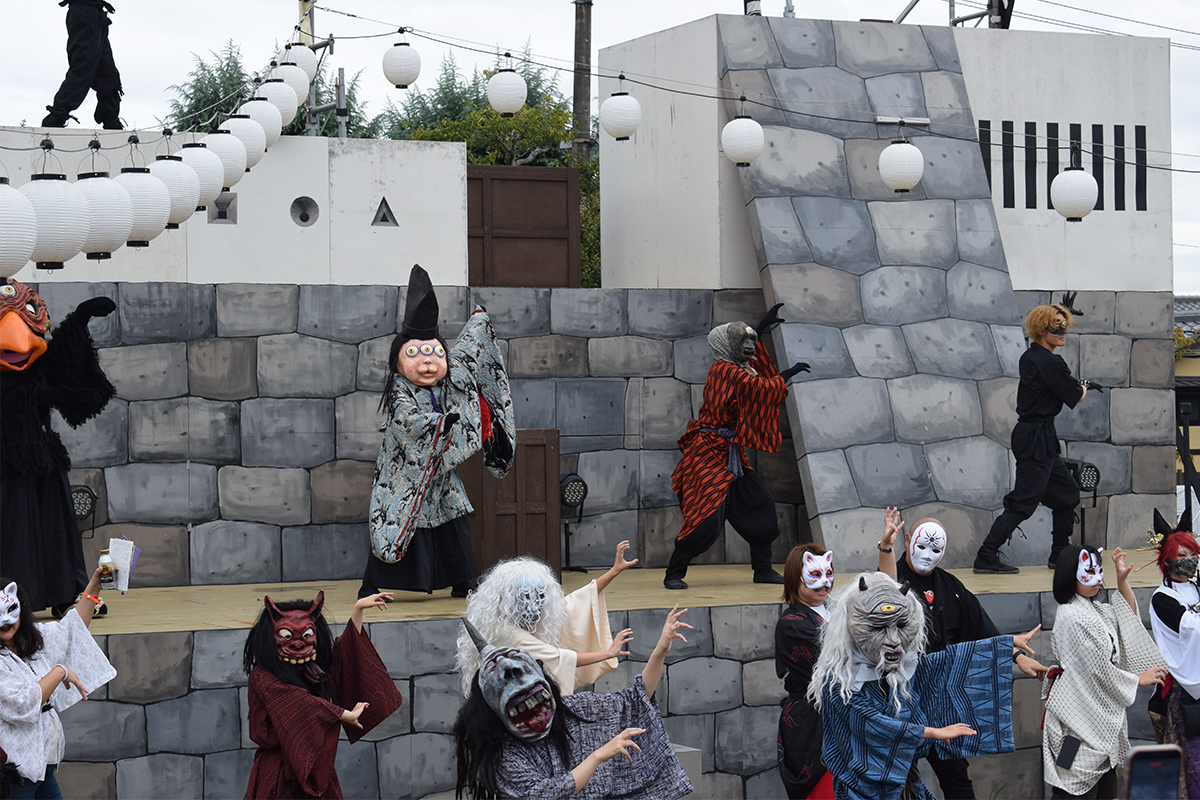
We were all too happy to get to the park and see the yokai for ourselves. Our first encounter with them was the daytime parade. The weather was gloomy and overcast which made the perfect atmosphere for the yokai to come out and play. They were preceded by ninja dancers who flipped and twirled and awed the spectators just before the main event.
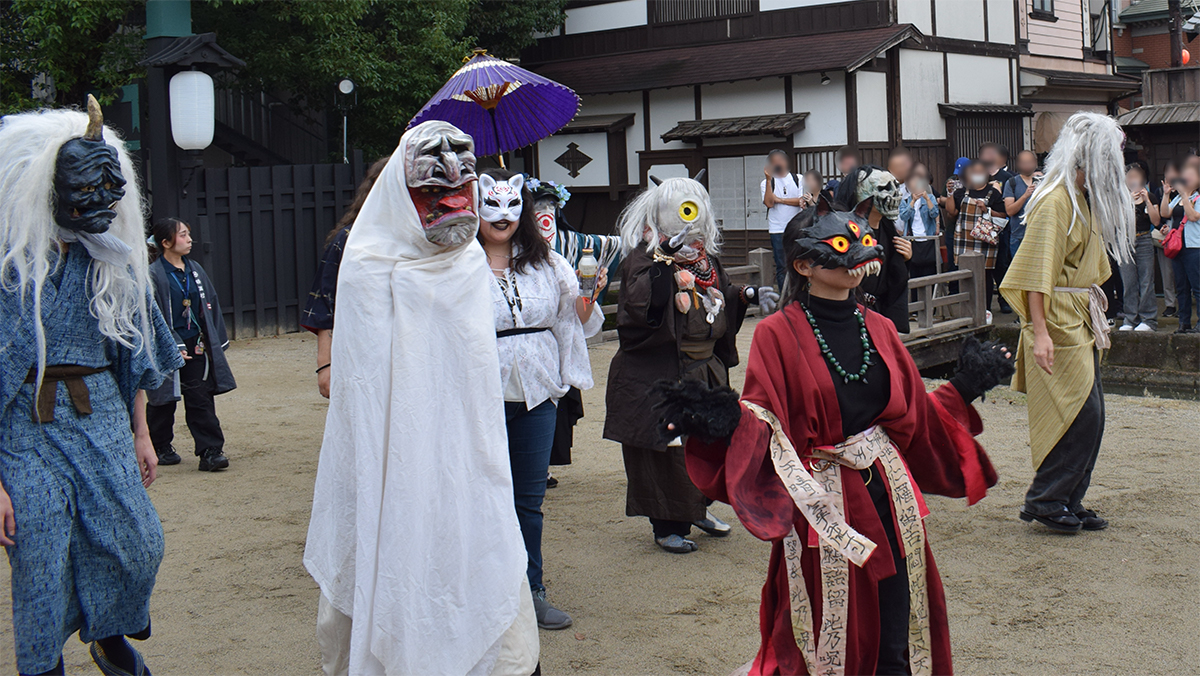
The crowd began clapping their hands in time to the music as the yokai appeared. With incredibly detailed and artistic costumes, not only was it a thrill to see the yokai from folklore materialize right before our eyes, it was equally as fun to see them dance along with the music and entertain the crowd. The procession proceeded to a stage where the audience was taught a dance that would make them honorary yokai themselves.
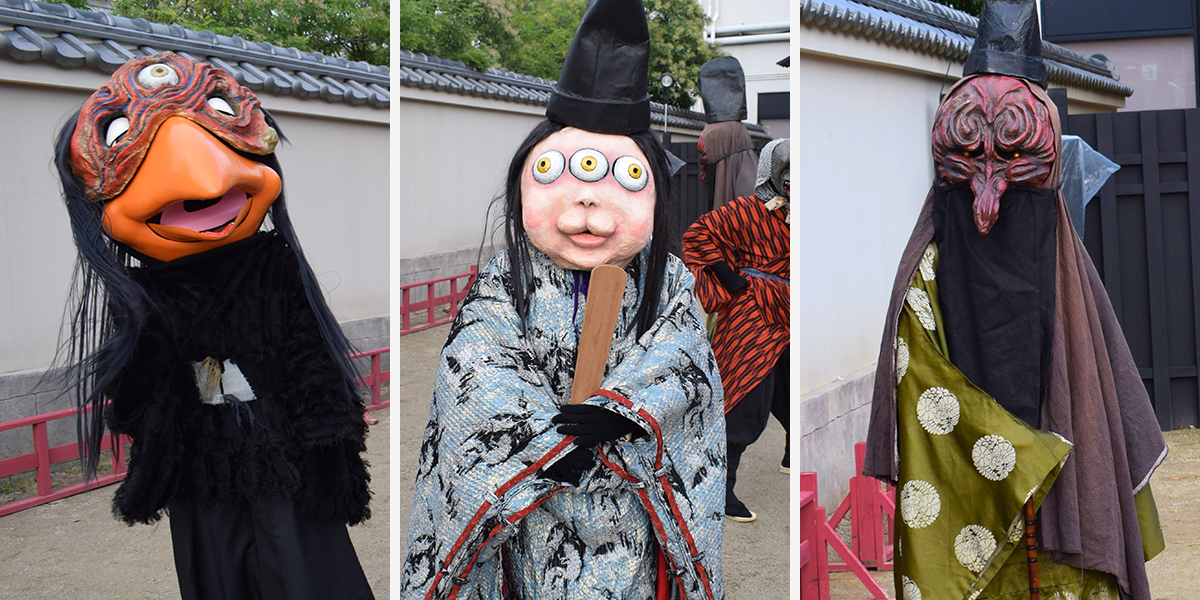
Some of the yokai that we encountered during the parade were Yagyo Doji (夜行童子) a charming three-eyed yokai child and the leader of the parade. Resplendent in Heian era clothing, Yagyo Doji has an innocent, almost cute demeanor and was definitely a crowd favorite.
Te no Me (手の目) is exactly as the name says: an old man with eyeballs in his hands. To make it even scarier is that those hands are sprouting from his face where his eyes should be! It was unsettling to say the least.
The dignified Tengu (天狗), lord of the mountains, also made an appearance at the parade. Tengu are often depicted either as bird-like creatures or as red-faced monsters with long noses. This Tengu managed to blend both of these appearances together resulting in something unique and just as frightening.
Finally there was Hitotsume Kozou (一つ目小僧) a yokai of a small child with a single large eye in the middle of its forehead. This yokai is often seen in traditional paintings and folklore and is known for scaring people in the dark.
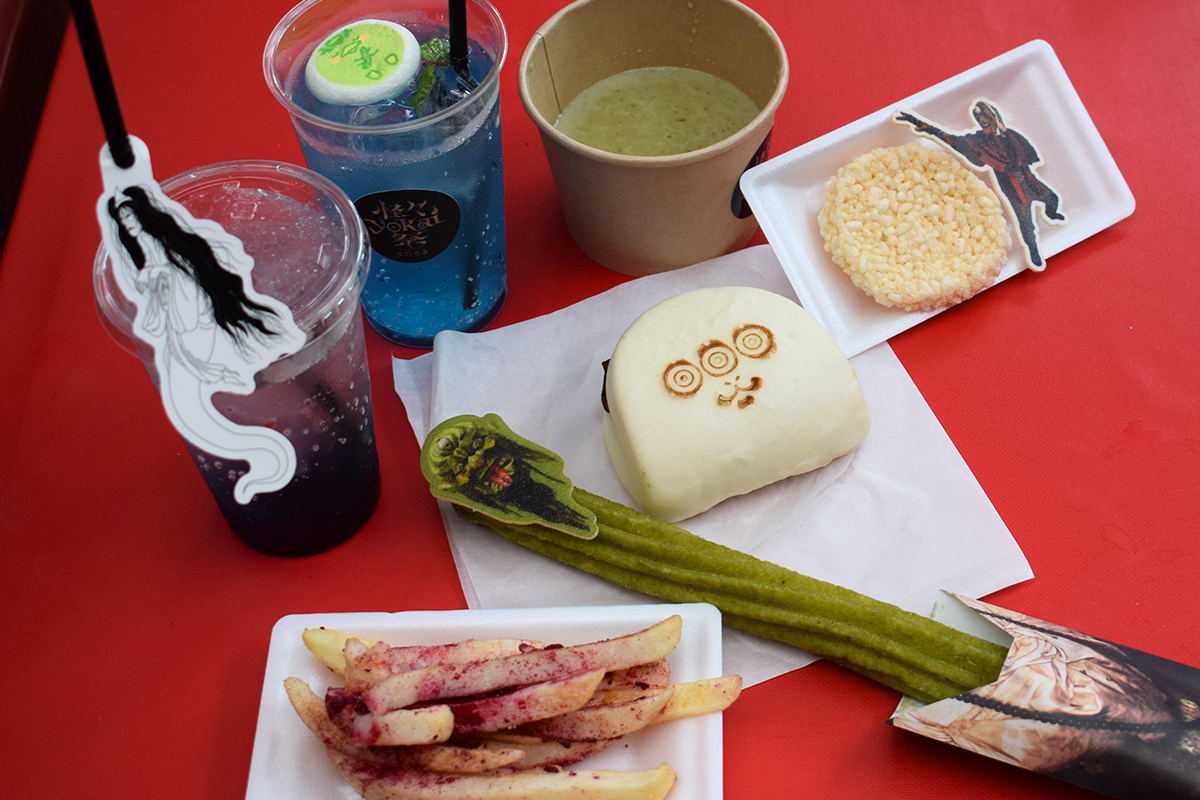
After the parade, we were free to take in the atmosphere of the park and see what other treats the festival had in store. It turns out that there were literal treats in the form of yokai-themed food and drinks that we could enjoy. Some of the highlights were a matcha churro shaped like the goblin yokai Mikoshi-nyudo with its ever extending neck and green skin as well as a pork bun with the pleasant face of Yagyo Doji looking back at you. There was also a bright blue melon soda with an adorable kappa floating merrily on top of it and much more. We were able to eat our fill and enjoy the feeling of having food that was a little out of the ordinary.
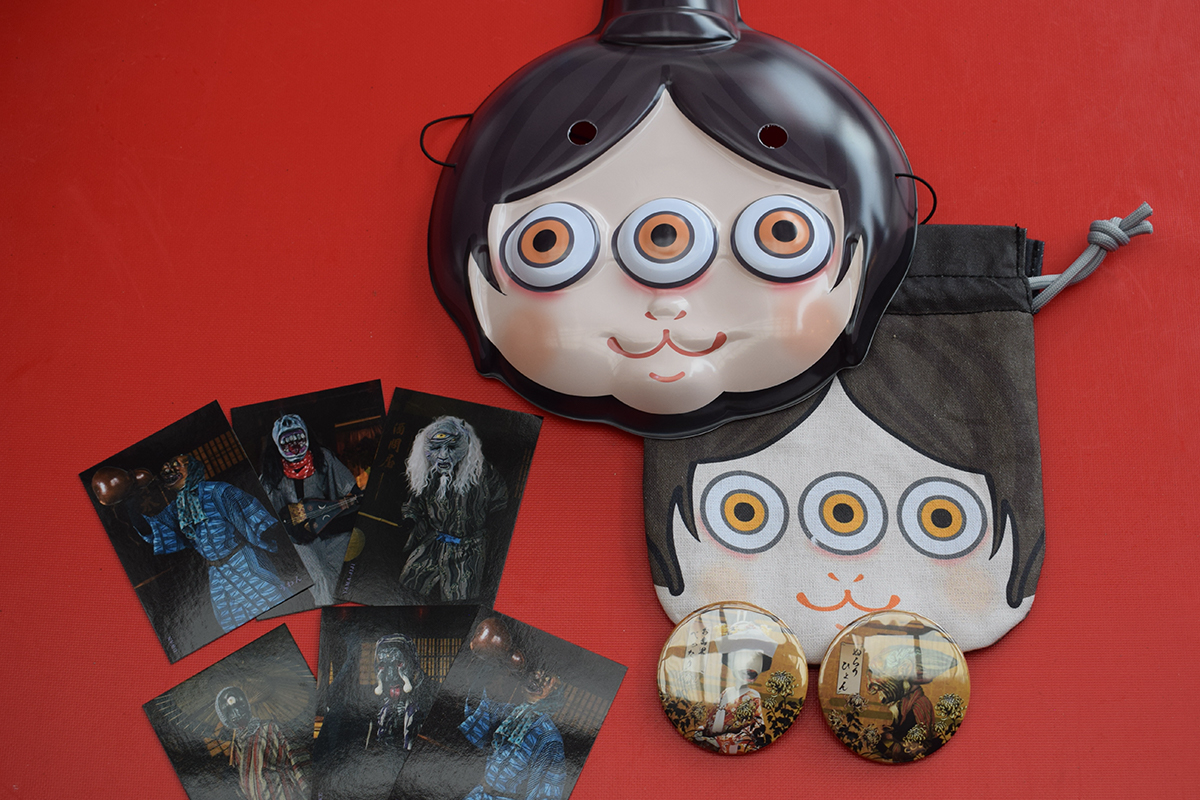
For those who wanted something of the festival to take home with them, there were also lots of goods available for purchase. These included our personal picks of randomized sets of yokai trading cards and badges each featuring a photo of a yokai from the festival. You could also revel in becoming a yokai yourself with a mask of Yagyo Doji or carry it around in the shape of a pouch. Stationery lovers could enjoy the yokai stickers or clear folders and those wanting something delicious could take home yokai rice crackers and tea. Whatever your preference, there was something for everyone!
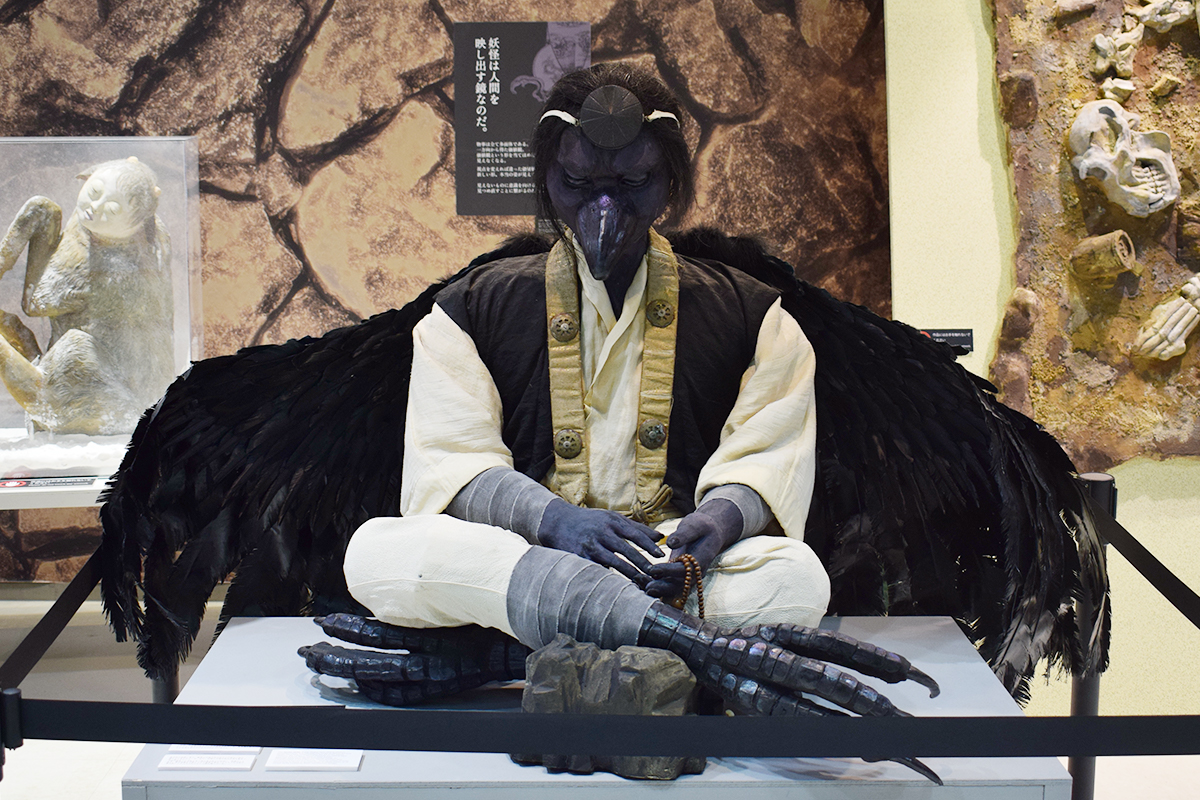
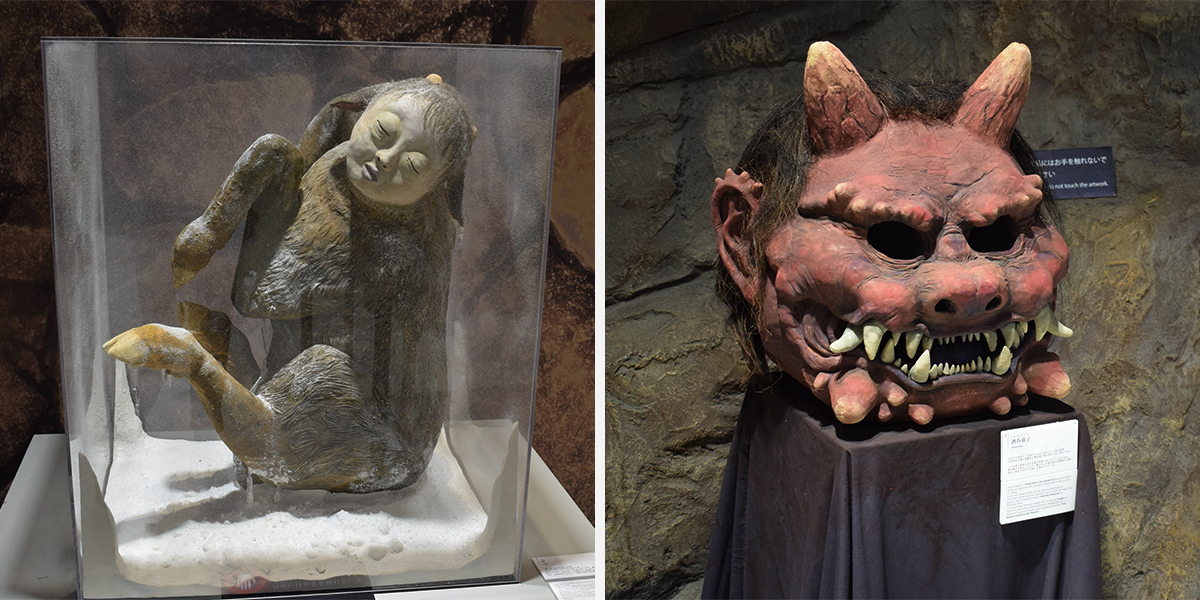
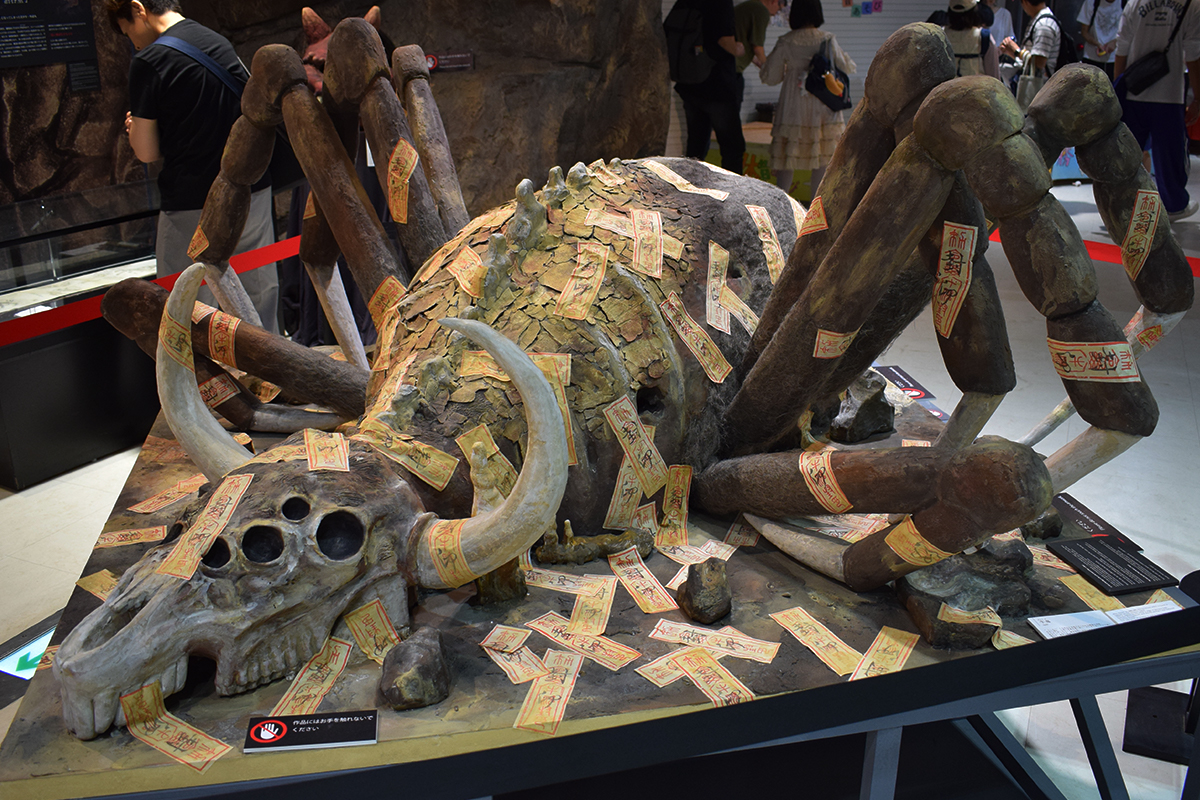
As we wandered around the area we also came across an exhibit area called the “Yokai Museum” featuring works by award-winning Kyoto University of the Arts graduate Shika. There we saw yokai that were so detailed they looked like they were about to come to life and leap at us.
When night fell, it was time for the parade once again. Unlike the parade during the day, this time you could tell that the yokai were truly in their element under cover of darkness. The crowd this time was twice as large and the air was filled with excitement and anticipation as everyone waited for the yokai to appear.
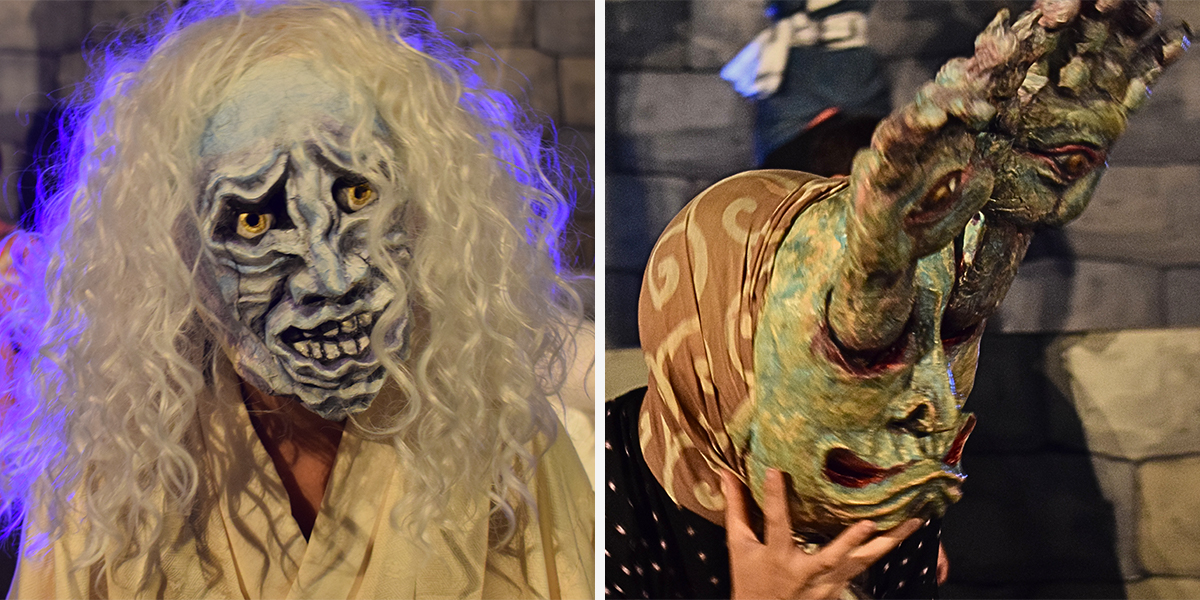
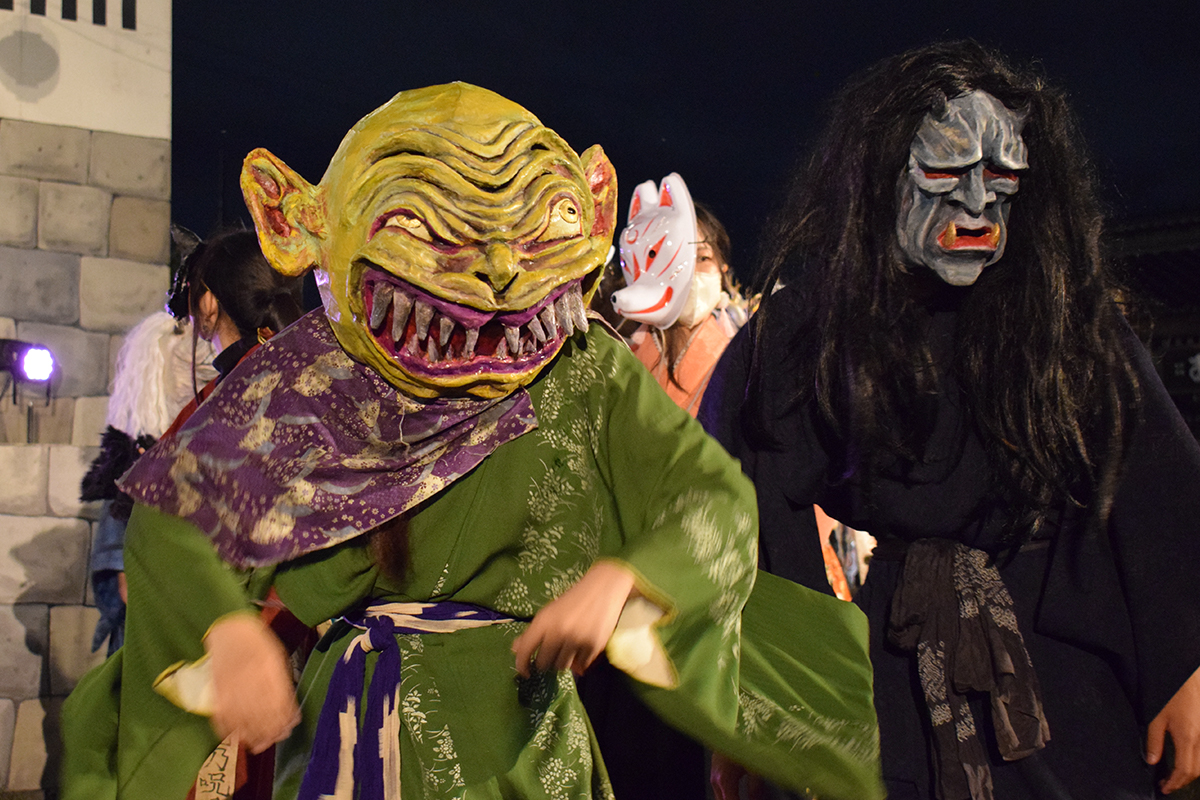
A fun feature of the parade was that humans could also apply to be a member of the procession if they had their own yokai costume. As a result, there were lots of additional participants dressed in their best yokai wear dancing along to the music. This was the highlight of the festival and it was made all the more atmospheric and interesting with the addition of colorful lights that illuminated the darkness and added an extra layer of wonder to the entire parade.
As the events of the day drew to a close, we unfortunately had to step away from the quaint streets of Edo and back into the modern era, but we left having had a satisfying taste of the enchanting world of yokai.
Check out Toei Kyoto Studio Park via their official website!